


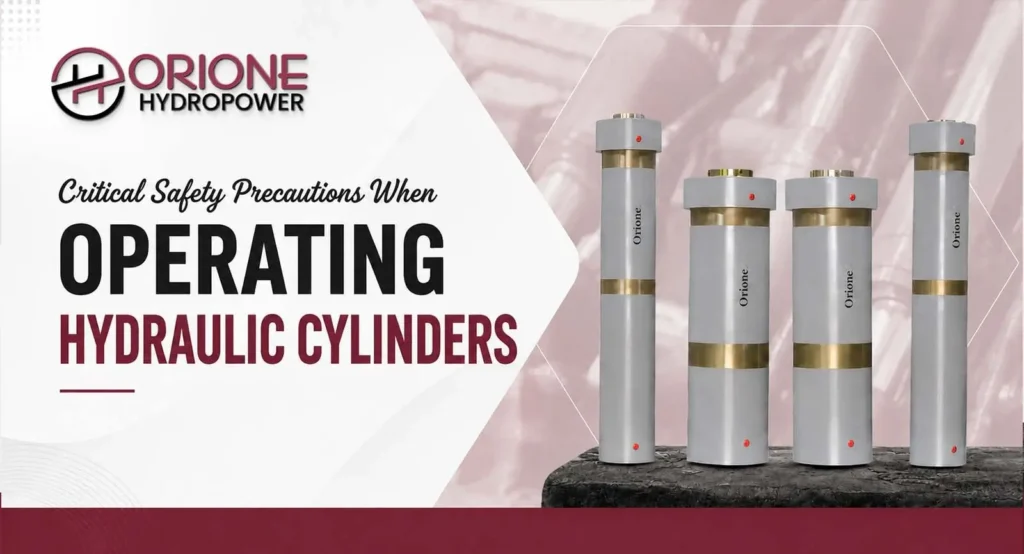
How well do you follow safety rules on real jobs? Operating a hydraulic cylinder comes down to this one thing only. If you use a Hydraulic Cylinder that looks fine but you skip the safety checks, it will leak, burst, or fail mid-job. If you don’t release pressure before maintenance, you risk injury or death. The right safety precautions match the actual work you need to do, not just the speed or the specs on the box.
In this blog, you will find out critical safety precautions when operating a hydraulic cylinder and the uses and types of hydraulic cylinder for your application.
Why Safety Matters for a Hydraulic Cylinder?
Safety is the most important thing when you work with a hydraulic cylinder. It decides if the cylinder can lift, push, or pull loads without hurting workers or damaging equipment. A hydraulic cylinder with poor safety practices gives you leaks, burst hoses, unstable loads, and injuries that take months to recover from.
A hydraulic cylinder with extra features is not always better. It can be heavier, harder to operate, and cost more than you need. Match your hydraulic cylinder to the work it will actually do, not to what the catalog says.
Good safety practices mean faster work, even performance, less equipment damage, and lower injury costs. A hydraulic cylinder that operates safely makes the job easier and cuts down on accidents.
The 80% Rule for Hydraulic Cylinder Safety
The 80% rule states that manufacturer’s ratings of load and stroke are maximum safe limits. Good practice when using a hydraulic cylinder encourages using only 80% of the load and stroke ratings that the manufacturer gives. Following the 80% rule will result in a safer, more stable system.
Most loads are not lifted on their true center. This introduces external side load force and increases the risk of load instability. When you limit usage to 80% of load and stroke ratings, you reduce this risk significantly.
Always Use a Saddle
Never use a hydraulic cylinder without a saddle. Doing so may cause the plunger to “mushroom.” You learn pretty quick that a saddle protects the plunger and spreads the load evenly on it. Consider using a tilting saddle—it helps reduce side load damage and makes the cylinder last longer.
When you handle heavy components during repairs, wear PPE such as safety glasses, a hard hat, gloves, safety shoes or boots, and protective clothing.
Provide Solid Support
You learn pretty quick that for a hydraulic cylinder to work safely and efficiently, it needs a solid base area. The base of the cylinder needs to be flat on the ground. So check that the surface the cylinder is on is clear of any debris. If you’re not sure about the surface, use a base plate for more stability.
Make sure you support the equipment enough , so it doesn’t fall or shift around unexpectedly while you’re running hydraulic cylinder operations. These cylinders can be pretty heavy, and yeah, they’re hard to lift, so use the right lifting gear like a crane or hoist. That’s how you avoid injuries from over-straining or pulling the wrong way.
Always Use a Pressure Gauge
A pressure gauge is a vital component of any hydraulic system. Using a pressure gauge helps to monitor the force applied on the cylinder within the reasonable margin of safety. Never operate a hydraulic cylinder without a pressure gauge. This leads to over-pressurization and creates dangerous conditions.
Crib Your Load
If you are working on your load (e.g., performing maintenance), you should always crib it. Never place any part of your body under the load. The load must be on cribbing before venturing under. Get away from the load immediately if something goes wrong. Don’t try to stop it—your safety comes first.
Uses and Types of Hydraulic Cylinder
Hydraulic cylinders show up in many places across the hydraulic industry. You learn pretty quick that understanding the uses and types of hydraulic cylinders helps you pick the right one for your job.
Single-Acting Hydraulic Cylinders
Single-acting hydraulic cylinders like the hydraulic jack in the auto industry extend under hydraulic pressure and retract by gravity or spring return. Best for lifting where the load comes back on its own.
Double-Acting Hydraulic Cylinders
The double-acting cylinder offers power for extension and retracting movement. The ability to move liquid in two directions means a double-acting hydraulic cylinder can help raise and lower equipment. Best for applications requiring controlled extension and retraction.
Telescopic Hydraulic Cylinders
You use a telescopic cylinder when you need a long stroke but the retracted length needs to stay short. Best for dump trucks, cranes, and material handling equipment.
Low-Height Hydraulic Cylinders
Low-height hydraulic cylinders are a good choice if you have limited space or want to move the cylinder around easily. Best for maintenance work where vertical clearance is tight.
High-Tonnage Hydraulic Cylinders
You learn pretty quick to get a high-tonnage cylinder if your projects require heavy lifting force. These cylinders can lift very heavy items that weigh over 1,000 tonnes. Best for heavy industrial applications.
These uses and types of hydraulic cylinders make them essential for construction, manufacturing, automotive, and material handling work.
Common Safety Mistakes with Hydraulic Cylinders
People make these mistakes often with hydraulic cylinders:
- Exceeding load limits – cylinder buckles or ruptures under excessive force
- Not bleeding pressure before maintenance – sudden movement causes injury
- Using damaged cylinder – leaks, unstable operation, or catastrophic failure
- Ignoring side loads – rod bends, seal damage, or cylinder head cracks
- No pressure gauge – over-pressurization and dangerous conditions
- Non-manufacturer modifications – cylinder may not work properly and should not be used
Another mistake is thinking all hydraulic cylinder units with the same tonnage perform the same. Seal material, rod hardness, barrel quality, and port design matter a lot.
How to Get the Best from Your Hydraulic Cylinder?
To get the most from your hydraulic cylinder:
- Inspect the cylinder for signs of damage before each use
- Check all connections and fittings for leaks before restarting the system
- Release any pressure in the hydraulic system before performing repairs
- Ensure the hydraulic system is securely locked out and tagged out before beginning repair work
- Keep both the cylinder and surrounding area clean to ensure safety
- Use approved accessories and proper hydraulic fluid
- Read all warning labels and instructions given in the user manual
Think ahead for future jobs. If your load type or weight may change, pick a hydraulic cylinder that can handle that without being too large for now.
Final Thought
Operating a hydraulic cylinder safely comes down to matching safety practices with your load, stroke, and work conditions. When precautions fit, flow stays steady, lifts stay stable, and accidents stay low. Skip safety and you deal with leaks, ruptures, and dangerous spills.
Orione Hydropower puts out hydraulic cylinders built to perform and last in construction, manufacturing, and industrial applications. When you get the material, tonnage, and safety features right, you protect your crew, save time on lifts, and handle loads properly without accidents.
If you want to see different hydraulic cylinder options and connect with folks who know hydraulic safety, head over to the Orione Hydropower website. They can help you choose the right hydraulic cylinder for your application and show you how to install and maintain it safely.
FAQs
A saddle guards the plunger and helps spread the load more evenly; this stops mushrooming and side-load damage, which happens when the force is not balanced.
You’ve got single-acting, double-acting, telescopic, low-height, and high-tonnage cylinder styles for lifting, pushing, pulling, and pressing tasks.
Cylinder buckles, ruptures, leaks, or fails catastrophically, causing injury or equipment damage.
A pressure gauge monitors force within safe margins, preventing over-pressurization and dangerous conditions.
