

In many industries, work cannot move forward without controlled force. Lifting heavy parts, pressing materials, or testing equipment all require steady pressure. While powered systems are common, manual tools are still widely used because they are reliable and easy to handle.
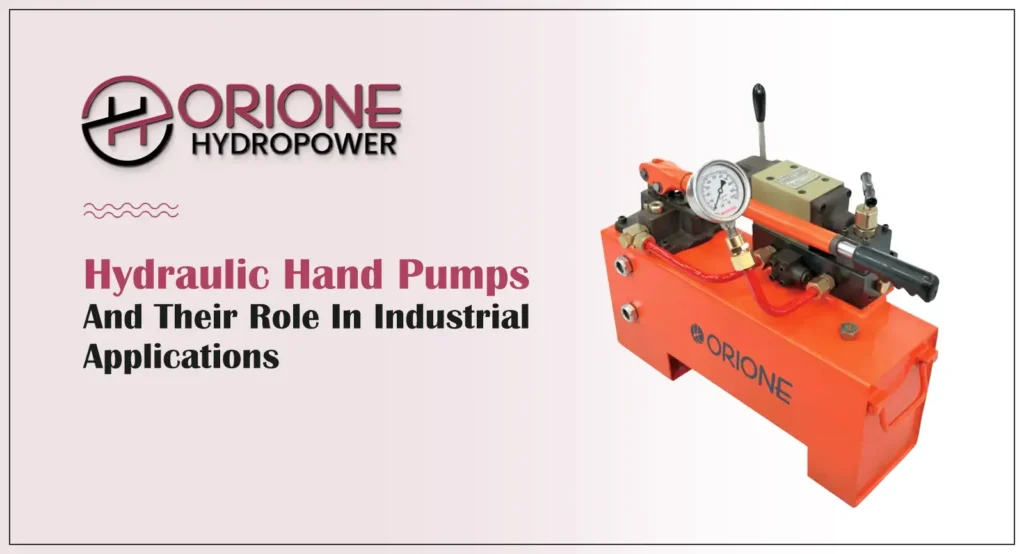
This is where the Hydraulic Hand Pump comes in. It is a device that helps industries perform important tasks without depending on electricity. But what’s so special about this is that it continues to be an essential part of industrial work.
Here’s a Complete Handbook of Hydraulic Hand Pump and its various applications.
Understanding the Basics of a Hydraulic Hand Pump
What It Is
A Hydraulic Hand Pump is all about manual control. You power the system using a handle rather than a motor. This movement shunts hydraulic fluid through the pump to create the pressure needed to lift or push heavy loads. It’s a straightforward and reliable way to get a lot of electricity without a power outlet.
How It Operates (In Easy Terms)
At its core, a hand pump converts your exertion into hydraulic energy. When you pump the handle, you’re moving a piston. This action draws oil from a small tank (the reservoir) and forces it through a valve into a hose or cylinder. Because liquids don’t compress, that oil has to go somewhere—and it ends up pushing whatever load is in its way.
And as you are the one moving the handle, you have 100% control over how much pressure is applied. If you need to stop at a precise millimetre, you just stop pumping.
Key Components and Their Functions
A Hydraulic Hand Pump has a few important parts that work together. The oil reservoir stores the hydraulic fluid. The piston creates pressure when the handle is moved. Valves manage the flow of oil and prevent pressure from moving backward.
Seals play an important role by preventing leaks and keeping everything secure. Together, all the parts work in harmony to make sure the pump operates smoothly and stays dependable for a long time.
Industrial Applications of Hydraulic Hand Pump
You’ll find these pumps everywhere because they’re so versatile. On a messy construction site, they’re the go-to for nudging massive steel beams into the perfect position. Inside a factory, you’ll see them being used to press bearings into place or hold parts tight with a clamp. They are the “muscle” behind the scenes of most heavy-duty repairs.
Maintenance teams count on it for testing and repairs, and workshops use it whenever controlled force is needed. Because it’s lightweight and easy to operate, it fits seamlessly into a variety of industrial settings.
Advantages of Using a Hydraulic Hand Pump in Industry
One of the biggest advantages of a Hydraulic Hand Pump is that it does not need electricity. This is why it works well in remote locations and during emergency work. It gives the user full control over pressure, which helps prevent damage to machines and tools.
The pump is also easy to look after and can be used for many years without trouble. Because of this, many industries see it as a reliable and budget-friendly option.
Choosing the Right Hydraulic Hand Pump for Industrial Needs
It is crucial to consider the intended use of a Hydraulic Hand Pump. Industries should examine the necessary pressure level, the working conditions, and the material quality.
Understanding load requirements is also important. Referring to a complete handbook of Hydraulic Hand Pump details can help users make the right decision and avoid future problems.
Conclusion
When the job is tough, you need gear that won’t quit like the Hydraulic Hand Pump. At Orione Hydropower, we don’t just build tools; we build solutions. We know that industrial environments are dirty, cramped, and demanding. That’s why our hydraulic hand pump is designed to be rugged and straightforward. When you choose us, you’re getting a partner that values performance as much as you do.