


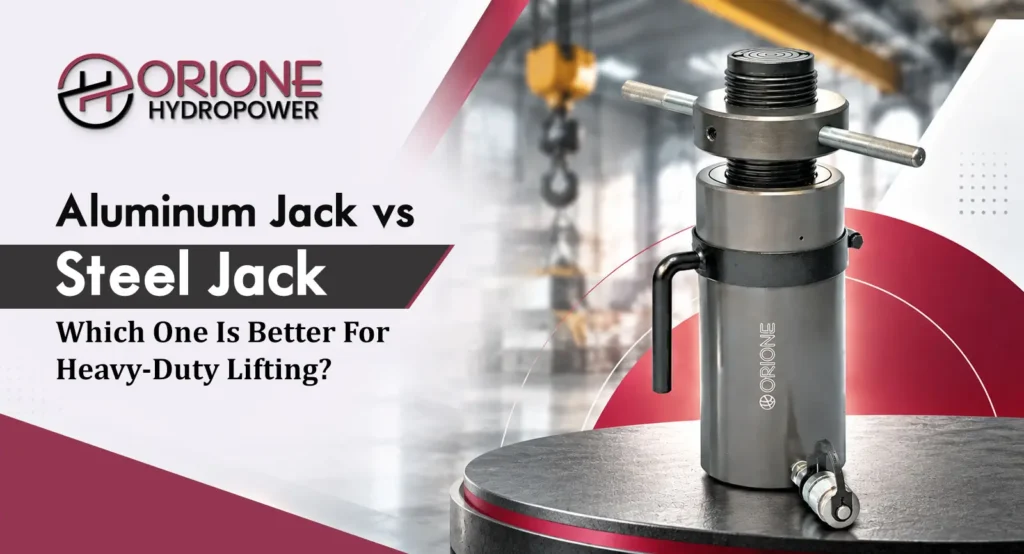
Overview – Ask five people on the shop floor whether they would pick an aluminum jack or a steel jack, and you will get five different answers. Most of them will just be telling you what they are used to, not what actually suits the job. This blog puts an aluminum jack and a steel jack side by side on the points that matter: weight, capacity, how long it lasts, and cost, so you can pick based on your own site and not just on habit.
This blog covers:
Introduction
An aluminum jack and a steel jack both do the same job. Both lift heavy vehicles, machinery, or structures using hydraulic pressure. The difference is the metal, and that changes how the jack feels and works on site. Steel has been the standard for years because of its strength. Aluminum has picked up in the last few years with buyers who care about weight and easy handling just as much as lifting power. Neither one wins every time, so let us look at the real differences one by one.Weight and How Easy It Is to Carry Around
An aluminum jack weighs almost half of a steel jack with the same capacity. That matters when someone has to carry it up scaffolding, fit it into a tight machine gap, or walk it across a large plant floor a few times a day. A steel jack of the same size usually needs two people to lift without strain. One person can carry an aluminum jack alone without much trouble. If your work includes moving the jack around a lot instead of leaving it in one spot, this weight difference adds up fast over a full day.Load Capacity for Heavy Work
Aluminum jacks now go from 30 tons up to 200 tons. That covers most heavy industrial and construction jobs. Many buyers still think steel is the only safe choice for heavy loads, but that is not true anymore. Steel does go higher for the toughest jobs, and it stays the choice at that top end. But for most factory, plant, and construction work, an aluminum jack with the right rating gives you all the lifting power you need, without the extra weight steel adds.How Long Each One Lasts on Site
A good aluminum jack, built with anodized parts and proper seals, is made to run for several thousand duty cycles. With regular use, it holds up just as well as steel. This surprises people who still think aluminum is the weaker metal, but the numbers say otherwise. Steel does pull ahead in one area: rough handling. If jacks on your site get dropped, dragged, or knocked around a lot, steel takes that kind of use better. But if your team looks after the jack and stores it properly, this gap barely shows.Rust and Corrosion in Outdoor Conditions
Steel jacks rust if they are not coated and looked after well. Once rust starts, it shows in how the jack looks and in how smoothly it moves. This matters more on sites near the coast, in humid areas, or anywhere the jack keeps getting wet. An aluminum jack handles this much better on its own. Aluminum builds a thin protective layer by itself, and anodized finishing adds another layer on top. On outdoor sites, ports, or coastal plants, this point often matters more than weight or price.Cost Over the Life of the Jack
Steel jacks cost less to buy at first for the same capacity, since aluminum as a raw material costs more to produce and shape. Price is usually the first thing buyers check, but it is not the full picture. An aluminum jack being lighter can cut down labor costs on jobs that need frequent moving. It resisting rust better can also mean fewer replacements over time in wet or outdoor spots. Whether the higher price of an aluminum jack is worth it depends on how often you move it and where it works. Add up the full picture instead of just checking the price tag.Which One Suits Your Kind of Work
Go with an aluminum jack if your work means moving it around a lot, working in tight or raised spots, dealing with outdoor or humid conditions, or having just one person handle it alone. Go with a steel jack if your site sees rough handling, needs capacity higher than what aluminum covers, or the jack stays fixed at one lifting point where carrying it does not matter. In short, the right choice depends on how the jack is actually used, not on which metal sounds tougher. Many plants and workshops now keep both types and use each one where it fits best, instead of picking just one for everything.Where to Buy a Reliable Aluminum Jack
Orione Hydropower, based in Navi Mumbai, Maharashtra, has been making hydraulic tools and lifting equipment since 2003. Their Aluminium Jack range, sold under the OASP series, comes in capacities from 30 to 200 tons, with a 150 mm stroke and a maximum working pressure of 700 bar. It includes anodized parts and optional base mounting holes for jacks that need to stay fixed in place. These jacks weigh about half of a steel jack of the same size and are built for around 5000 duty cycles. They are used in construction, power plants, petrochemical sites, automotive repair, and industrial machinery work. The team also works out custom solutions if your capacity or mounting need is different from the standard range.Frequently Asked Questions
Yes, as long as the jack is rated for the load you are lifting. Aluminum jacks go up to 200 tons, which covers most heavy vehicle and machinery work. Check the rating against your load first, since that matters more than the metal itself.
Not really. Regular cleaning, checking the seals, and greasing the ram apply the same way to both types. Aluminum jacks just need less worry about rust, since they resist corrosion better than untreated steel.
Aluminum costs more to source and machine than steel. Making a lightweight jack that still holds heavy loads also needs more precise work. This extra cost usually pays for itself over time through easier handling and fewer replacements in outdoor or humid spots.
Yes, but check the finish first. An aluminum jack with a good anodized finish handles outdoor use well. A steel jack that goes outdoors often should have a rust-resistant coating on it to keep corrosion away.
